TREATMENTS FOR OSTEOPOROSIS

Education and knowledge of the disease are fundamental for self-care and prevention of osteoporosis.

Detecting the disease early allows treatment to begin as soon as possible, which helps to slow its progression, reduce the risk of bone fractures, and improve quality of life.

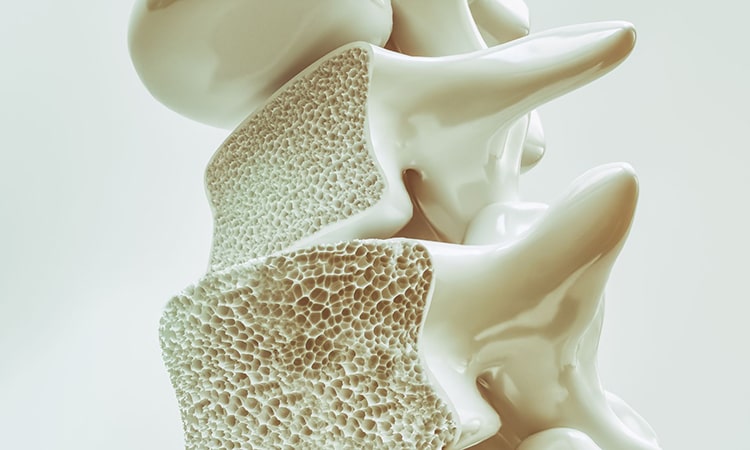
The treatment of osteoporosis aims to slow the process and improve the patient’s quality of life by improving bone strength and reducing the risk of fracture.

More than half of women at high risk of fracture or who have had a first fracture are not treated, with an estimated treatment gap of 64% in women over 50 years of age.

Below are several recommendations for bone health. Always remember to consult your doctor to determine the most appropriate treatment for your individual needs.

PREVENTIVE MEASURES AND NON-PHARMACOLOGICAL TREATMENTS

They are a fundamental part of the treatment of osteoporosis and will positively influence its evolution.

  • 1. Take care of your diet

    Weight can be a modifiable risk factor for osteoporosis. Being overweight or, conversely, malnourished increases the risk of osteoporotic fractures. A diet rich in fruits, vegetables, low-fat dairy products, whole grains, poultry, fish, nuts, and legumes has a positive effect on bone health and is directly associated with better bone mineral density (BMD) and a lower fracture risk. Understanding your body and your eating habits can greatly help prevent fractures and improve bone health. Consult a healthcare professional before making any changes to your diet.

  • 2. Engage in appropriate physical activity

    Low-impact activities such as walking, yoga, Pilates, or water aerobics can be especially beneficial. These exercises help strengthen bones and muscles, stimulate bone formation, and contribute to weight management, muscle strength, coordination, and balance, which in turn reduces the risk of falls and fractures. However, it is essential to always consult your doctor before starting any exercise program and to determine which type of activity is most suitable for your individual needs.

  • 3. Take care of your posture

    There are certain postures in daily life that can contribute to the development of specific aches and pains, while others can prevent them. Maintaining proper posture helps prevent injuries and falls, and reduces stress on the bones, especially the spine. Sometimes, even the simplest actions aren't performed correctly, and this can have consequences for our bone health. How we get out of bed, stand up after sitting for hours, or pick up objects from the floor are common everyday actions that, without us realizing it, pose risks to our health. Consult the postural recommendations in the OAFI Osteoporosis Guide.

  • 4. Check your Calcium and Vitamin D levels

    Calcium and vitamin D are essential for maintaining good bone health. It's crucial to maintain optimal levels of these elements in the body from birth, as a chronic deficiency can decrease bone mass and increase the risk of fractures. Consult your doctor before starting any supplementation.

  • 5. Our home as a source of prevention

    There are several modifications you can make to your home to prevent falls and improve your mobility. These adaptations can make a big difference to your daily safety and comfort. Improving lighting, adapting the bathroom, removing obstacles, and making it easier to go up and down stairs can be key. See the recommendations in the OAFI Space website.

ALIMENTACIÓN Y HÁBITOS SALUDABLES
EN PACIENTES CON OSTEOPOROSIS
TODO SOBRE LA VITAMINA D: FORTALECE TUS HUESOS
ARQUITECTURA, ARTROSIS Y OSTEOPOROSIS: ¿SABES POR QUÉ ESTAN RELACIONADAS?

PHARMACOLOGICAL TREATMENTS

Treating osteoporosis often involves choosing one or more of these types of medications, depending on the severity of the disease and the patient’s specific needs. It’s important for a doctor to assess each individual situation and determine the most appropriate treatment. Keep in mind that what works for one patient may not work for another.

  • Antiresorptive drugs

    Antiresorptive drugs prevent bone loss. Examples include estrogens, bisphosphonates, estrogen receptor modulators, and certain monoclonal antibodies.


  • Bone-forming drugs

    Bone-forming drugs stimulate bone formation, such as a parathyroid hormone analogue.

  • Dual drugs

    Dual-action drugs combine antiresorptive and osteoformative properties. Certain drug combinations may be of interest.

  • Supplements

    Supplements ensure an adequate supply of essential nutrients such as Calcium and Vitamin D for bone health.

Remember that it is very important to follow your doctor’s instructions, take your medications according to the recommended doses and schedules, and do not hesitate to ask questions if you have any doubts about how to carry out your treatment properly.

FRACTURE COORDINATION UNITS (FLS)

Fracture Coordination Units (or FLS) are specialized teams that are responsible for detecting, treating and monitoring people who have suffered a fragility fracture caused by osteoporosis.

These units work in a multidisciplinary manner, ensuring that each patient receives a complete bone assessment, appropriate treatment, and support to prevent further fractures.

You can consult the map of internationally recognized FLS units with the International Osteoporosis Foundation’s “Capture the Fracture” Campaign:

At OAFI, we support you in caring for your bone health. We offer you our Solidarity Clinic, a space where you can receive a personalized medical assessment, guidance to improve your osteoporosis or a second opinion if you need to resolve your doubts.

We’re here to help!

RESOURCES OF INTEREST - SPANISH AGENCY FOR MEDICINES AND HEALTH PRODUCTS (AEMPS)

CIMA

Find your medication. Check authorizations, availability, package inserts, supply issues, etc.

NotificaRAM

Electronic form for reporting suspected adverse drug reactions. An adverse effect is a reaction to a medication that was not expected or desired.

NotificaPS

Spanish System for the Surveillance of Medical Devices. You can report any incidents involving medical devices that may have had serious health consequences.